
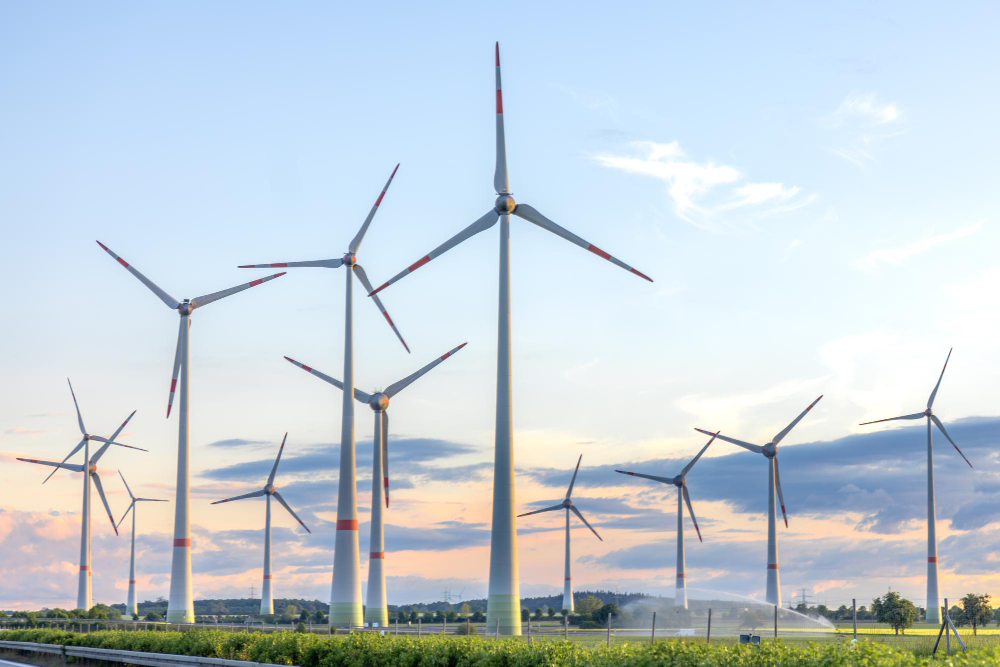
Breaking away from fossil fuel volatility: Solar and wind power cut Europe’s electricity costs by 25%.
Recent data indicates that electricity prices drop more significantly as renewable energy capacity increases. Amid Europe’s ongoing energy crisis and unstable fossil fuel markets, investment in renewables has played a crucial role in protecting both consumers and businesses from sharp price rises.
Since 2019, Spain has doubled its wind and solar capacity, adding over 40 GW—more than any EU nation except Germany, whose electricity market is nearly twice as large. This expansion has reduced Spain’s dependence on fluctuating gas prices, which surged by 55% immediately after the start of the Iran war and have remained unstable since.
In the United Kingdom, wind energy has also reached new milestones. On March 26, generation peaked at 23,880 MW—enough to supply around 23 million homes.
According to SolarPower Europe, solar energy alone has saved Europe over €100 million per day since March 1, totaling more than €3 billion. If gas prices stay elevated, total savings in 2026 could reach €67.5 billion.
A recent report highlights that between 2023 and 2025, electricity prices in several European countries fell by nearly 25% on average due to increased use of renewable energy. Research by Positive Money found that renewables lowered electricity prices by an average of 24.2% across 19 countries by replacing expensive fossil fuel generation and reducing wholesale costs.
However, fully separating electricity prices from gas price fluctuations is still in its early stages in many regions. Expanding wind and solar capacity, along with investing in flexibility solutions like battery storage, rooftop solar, and adaptive pricing systems, will be essential to further reduce reliance on fossil fuels.
The findings also emphasize important policy directions. Countries with limited renewable capacity can quickly lower electricity costs by accelerating wind and solar adoption. Meanwhile, nations with higher renewable penetration should focus on improving energy storage and balancing supply and demand.
Overall, increasing renewable energy not only lowers costs but also strengthens Europe’s energy security, supports economic electrification, and reduces long-term dependence on fossil fuels.v